Why Values and Culture Are Crucial in Recruiting
In an era where candidates increasingly value purpose, attitude, and authenticity, a lived company culture is the foundation of a strong employer brand. Talent wants to know how a company really works:
⇒ How do people collaborate?
⇒ Which values shape everyday life?
⇒ And does one's own attitude align with the employer's culture?
These questions cannot be answered with glossy campaigns, but through honest insights, genuine voices, and clear messages.
Best Practices: Communicating Values and Culture Credibly
1. Making Purpose and Attitude Visible
✔ Credibility and trust come first. Clearly articulate your "why" – the purpose behind your actions – and show how your company values are lived out in everyday life.
✔ Concrete behaviors and examples help make cultural fit tangible for candidates.
✔ Communicate consistently in your own voice and avoid generic claims.
2. Using Authentic Formats
To portray culture credibly, a mix of emotional and informative content is needed:
Photo galleries: Use real employee photos with image descriptions instead of stock material. Show workplaces, teams, and real situations.
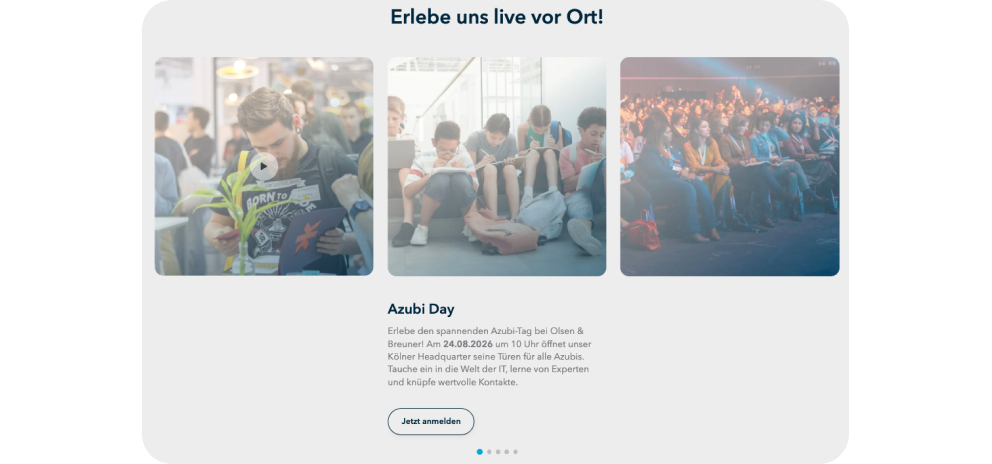
Text: Opt for short, concise texts with a clear structure. Formats such as "employee stories" or quotes from day-to-day work bring values to life.

Videos: Short formats (up to approx. 1:30 min.) work particularly well. Real employees, soundbites from managers, and insights into team dynamics create closeness and authenticity.

3. Creating Emotional Connection
✔ Tell stories that evoke emotions – for example, about moments of success, challenges, or team rituals.
✔ A consistent visual and verbal identity across all channels creates recognition and strengthens emotional connection.
✔ Employees identify more strongly when they see themselves reflected in the communication.
4. Making Meaningful Use of Partner Collaboration
✔ External marketing or content partners can assist with conception and production when internal time or resources are limited.
✔ Important: The cultural direction must always come from the company itself.
✔ Carefully assess which content you can create yourselves and where external support (e.g. video editing or SEO) makes sense.
5. Increasing Visibility: SEO & International Reach
SEO Optimization
✔ Use clear headings (H2/H3) and relevant keywords such as "company culture," "careers at …," or "team culture."
✔ Add meaningful meta titles and descriptions, and maintain image descriptions (alt tags).
✔ Use tools like Google Analytics to analyze which terms perform well.
6. Considering International Reach
✔ Values and culture are interpreted differently in different countries.
✔ Identify which topics are locally relevant (e.g. work-life balance, security, or innovation) and adapt your tone and emphasis accordingly – without changing the core of your culture.
Customer Examples as Inspiration
Numerous companies already demonstrate how credible culture communication can succeed, including:
The examples make one thing clear: culture communication can look very different – but authenticity is always the decisive factor.
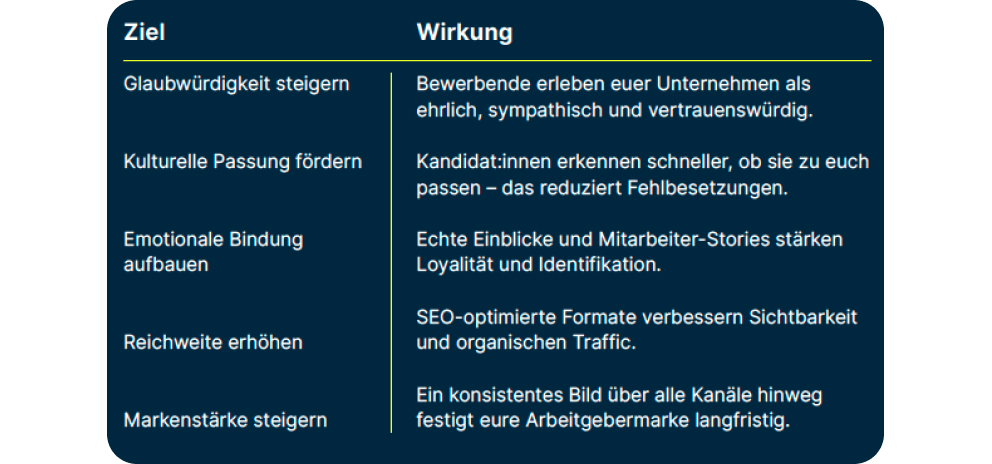
Goals & Effects of Strong Culture Communication
A consistently communicated understanding of values and culture leads to:
Conclusion
A strong company culture is not a marketing slogan – it is a lived promise. Those who show what the company stands for, how work gets done, and which values shape everyday life create an honest connection between people and brand – and win over the right talent in the long run.
Was this article helpful?
That’s Great!
Thank you for your feedback
Sorry! We couldn't be helpful
Thank you for your feedback
Feedback sent
We appreciate your effort and will try to fix the article